Entry 3 (9 to 15 Feb): Pricing the risky step and finding it cheap
In early February the student information system rebuild changed shape. Instead of replacing the legacy operations system in one cut, we decided to deliver the new one use case at a time while the old system kept running. The strategy document compared six approaches, from improving the old code in place to running both systems side by side in shadow. Improving in place lost fast. No amount of refactoring turns a 2,500-line request handler with nearly a hundred methods into clean architecture.
The first architecture took the cheapest path for data. Replicate the old database, then reshape it with SQL views. The old user record carried over fifty fields across a dozen domains, and views would present it as separate customers, account owners, and staff. Login stayed on the old system, which would share its token with the new app through a cookie. Moving users to a new identity provider was deferred until the old system was switched off, because touching every login before proving anything looked like the riskiest step in the plan.
On 10 February we reversed both calls.
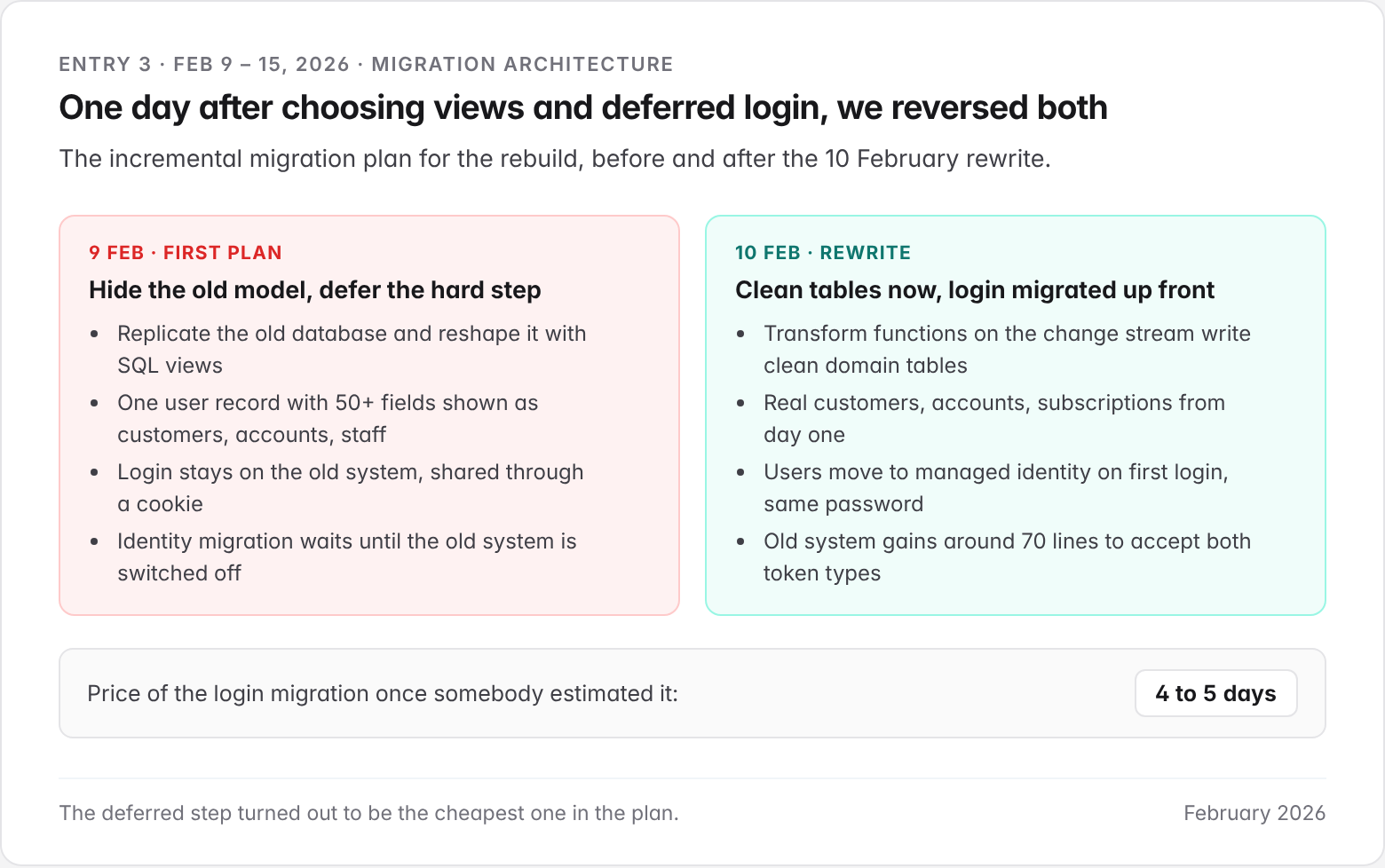
We think the data model is the most important part of a system, because every feature built on top inherits its shape. Views hide a bad model without fixing it. The new plan attached small transform functions to the database change stream. Each change from the old system lands as a write into clean domain tables, with real customers, accounts, and subscriptions from the first day. We could start with a few domains and add the rest as we built on them.
Login moved up front once somebody put a number on it. The managed identity service has a hook for exactly this case. On a user's first login it checks the password against the old system, creates the account with the same password, and the user notices nothing. Google sign-in needed no migration at all. The old system needed around seventy lines to accept both token types. The whole job came to four or five days, against carrying an auth migration all the way to decommission.
What I took from the week: the cheap option looked cheap only because we had never priced the expensive one. The moment the login migration had a cost of under a week, deferring it stopped being caution and became debt with interest.